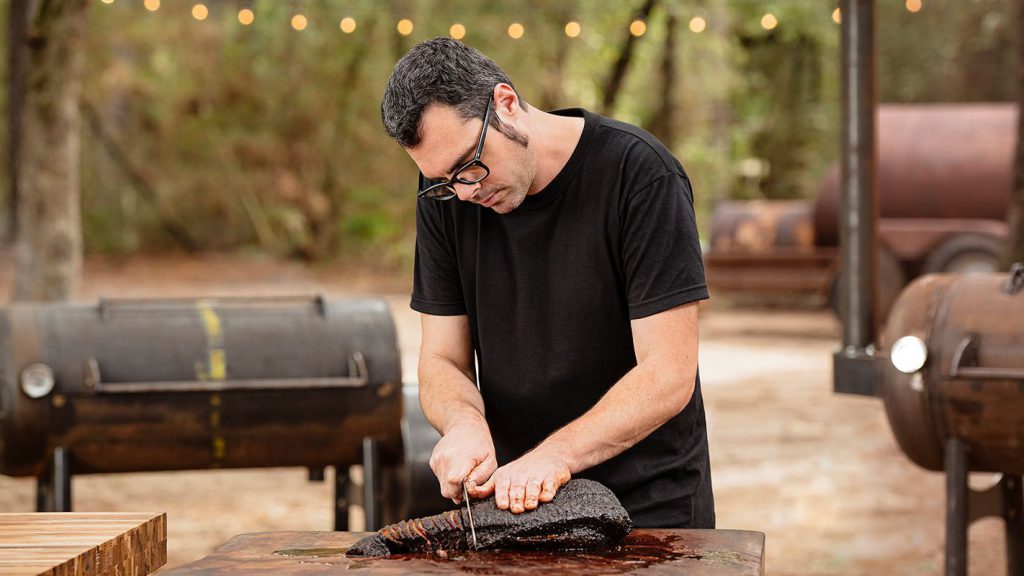
Master the Art of BBQ with Franklin
Contents
- What is BBQ with Franklin?
- How to BBQ with Franklin: Tips and Tricks from the Pitmaster Himself
- Step-by-Step Guide to BBQ with Franklin’s World-Famous Brisket
- BBQ with Franklin FAQ: Answers to Your Burning Questions
- Top 5 Surprising Facts About the History of BBQ with Franklin
- Behind the Scenes: A Look at How Aaron Franklin Runs His Famous BBQ Joint
- From Novice to Pitmaster: How Learning to BBQ with Franklin Can Transform Your Cooking Skills
- Table with useful data:
- Information from an expert
- Historical fact:
What is BBQ with Franklin?
BBQ with Franklin is a popular Youtube channel and television show hosted by Aaron Franklin, who is considered to be one of the best pitmasters in Texas. The show offers a step-by-step guide on how to make traditional Texas-style barbecue, covering topics such as smoking techniques, seasoning, and wood selection.
- Aaron Franklin’s BBQ restaurant has been awarded numerous accolades over the years including James Beard Foundation Awards for Best Chef: Southwest in 2015 and Best TV Show on Location in 2021
- Franklin Barbecue is known for its smoked beef brisket which are rubbed generously with homemade seasoning blend before being smoked slowly for up to 18 hours over oak wood.
- The YouTube series was first aired in 2012 and has since amassed millions of views from BBQ enthusiasts around the world.
How to BBQ with Franklin: Tips and Tricks from the Pitmaster Himself
Barbecue is one of the most delectable dishes known to mankind, and at the helm of this tasty wave is none other than Aaron Franklin – an acclaimed pitmaster who has gained worldwide recognition for his mastery in smoking meat. His approach to BBQ is so scientific that it almost feels magical in its outcome. Here are some tips and tricks that would help you in your quest to create the perfect BBQ like Aaron Franklin.
Start with Choosing Your Meat
As with any cook, BBQ requires premium quality meat for selecting which can be a daunting task. Remember, the quality of your meat will significantly impact your dish’s flavor and texture; hence ensure you select only high-quality cuts. Brisket, ribs, and sausage are some of the popular meats used for BBQing.
Prep Your Meat Like a Pro
Once you have your meat ready, start prepping them well before they meet the hot flames. Trim off any large chunks of fat on briskets or pork butts (leaving around 1/4 inch). You might need to remove certain connective tissues while trimming; however, don’t overdo it as a little bit goes a long way.
Set Up Your Grill
If you’re cooking at home and want authentic Texas-style barbecue flavor, then turn off electricity or gas grills because charcoal heat produces that nice smoky aroma we all love. After lighting up your coals allow them enough time to evenly distribute heat throughout the grill surface.
Low & Slow Cooking Method
Franklin emphasizes low and slow when it comes to barbecuing – meaning low temperature over an extended period (6-12 hours) allowing slow cooking ensures tender juiciness inside out leaving iconic sear marks on ribs or chicken towards the end of cooking—but keep those air vents open!
Add Wood for Smoky Flavor
Adding wood chips or logs enhances food’s flavor by creating aromatic smoke infused within ham hocks, briskets, chicken, or lamb chops. Hickory, Mesquite, and Maple are all excellent choices for bringing that aromatic Texas-style BBQ flavor to your dish.
Maintain Consistent Temperature & Humidity
With BBQ and grilling, consistency is key. Keep your temperature consistent by using a thermometer when cooking as changes in temperature can affect meat texture. Maintaining humidity is essential as well because low moisture level could leave the meat dry and overcooked.
Wrap-Up Your Meat for Juicy Perfection
Wrapping meat in foil or butcher paper has many benefits during the long smoking process. The wrap locks in moisture allowing heat to penetrate evenly inside resulting in cooked-to-perfection barbecue every time.
Resting Period After Cooking
Finally, Franklin recommends letting your meat rest before serving for about 30 minutes as this allows juices to set and enhances flavors further.
In Conclusion,
Nothing screams “summer” quite like enjoying great quality barbecued meat with friends and family. A few tips from Aaron Franklin’s guide will help you prepare an unforgettable dish that’ll have everyone raving about it for years to come!
Step-by-Step Guide to BBQ with Franklin’s World-Famous Brisket
Barbecue is a beloved American pastime, and nothing beats a mouth-watering brisket. One of the most famous pitmasters in America is Aaron Franklin – he’s even won the prestigious James Beard Award for Best Chef: Southwest. His Texas-style barbecue has become legendary, and his brisket recipe is out-of-this-world delicious.
If you’ve always wanted to try your hand at making slow-smoked brisket at home, follow these simple steps to create a succulent masterpiece that will have your friends and family begging for more.
1. Get your ingredients and equipment ready
For this recipe, you’ll need a 10-12 lb beef brisket (preferably from the point end), salt, black pepper, and some post oak or hickory wood chunks/chips. You’ll also need an offset smoker (or any BBQ grill that allows you to smoke meat indirectly) and plenty of time.
2. Trim the brisket
Proper trimming of the brisket is key to an evenly cooked end result. Start by removing any excess fat from the top of the meat. Then trim any silver skin on the bottom until only red meat remains.
3. Season with salt and pepper
Aaron Franklin’s signature seasoning blend is just three ingredients: kosher salt, coarse-ground black pepper, and some water mixed together in equal parts to form a paste. Rub this generously all over both sides of the brisket so that there’s a thick crust on top.
4. Preheat your smoker
Fire up your smoker using post oak or hickory wood chunks/chips – these woods are traditional in Texas barbecue and give off excellent smoke flavor without overpowering it with too much resin or harshness. Let it preheat until it reaches around 250°F (120°C).
5. Smoke low-and-slow
Place the seasoned brisket into your smoker away from direct heat with fat-side-up towards where smoke comes in so that it smokes and melts into the meat while cooking. Smoke it low-and-slow for around 12-14 hours, depending on the size of your brisket and how accurate your temperature gauge is.
6. Check internal temperature
After about 10 hours or so, check the brisket’s internal temperature with a meat thermometer to ensure it’s properly cooked. The optimal internal temp is around 195°C although even something as low as 180°F is still safe to eat although containing more fat. If not done yet, check again after an hour.
7. Rest and slice
Once the brisket reaches its perfect temp, take it out of your smoker-for safety purposes-outside previously placed on a rack nearby-away from direct heat with a tent foil over it for at least an hour so that juices redistribute within the meat before slicing against the grain with care-possibly using gloves-to preserve juiciness.
In conclusion, Aaron Franklin’s brisket recipe may seem straightforward when you broke down each step but there are several secrets like using post oak or hickory woods through an offset smoker which make his BBQ some of the most popular in Texas and beyond. When following these steps carefully from start to finish, you’ll be able to create a mouth-watering barbecue experience that’s as close as possible outside Franklin’s “mecca” barbecue joint itself – enjoy!
BBQ with Franklin FAQ: Answers to Your Burning Questions
BBQ with Franklin FAQ: Answers to Your Burning Questions
BBQ with Franklin is a web series hosted by Aaron Franklin, owner and pitmaster of the world-renowned Franklin Barbecue in Austin, Texas. The show offers insightful tips, tricks, and techniques for smoking delicious BBQ at home. In this article, we’ll answer some frequently asked questions about the series and help you take your BBQ game to the next level!
Q: What’s so special about BBQ with Franklin?
A: Besides being hosted by one of the most legendary pitmasters in the world, BBQ with Franklin offers a wealth of knowledge on all things barbecue. Aaron breaks down the science behind smoking meat and provides easy-to-follow instructions for beginners and experienced smokers alike. Plus, he’s got a great sense of humor that makes learning about brisket and pork ribs more entertaining than ever.
Q: Is there a specific order I should watch the episodes in?
A: While there isn’t necessarily a “right” way to watch BBQ with Franklin, starting from episode one can be helpful if you’re new to smoking meat. Aaron covers basic techniques like choosing wood chunks and maintaining temperature before moving on to more complex recipes like beef rib roasts and whole hog.
Q: Can I adapt these recipes for other types of meat?
A: Absolutely! While many of BBQ with Franklin’s episodes focus on pork or beef, most of the techniques can be applied to other meats like chicken or fish. Just keep in mind that cooking times may vary depending on what you’re smoking.
Q: What kind of smoker does Aaron use on the show?
A: Most episodes feature an offset smoker made by Austin-based company Moberg Smokers. However, Aaron has also used other brands like Yoder Smokers in previous episodes.
Q: Can I smoke meat without a fancy cooker like Aaron’s?
A: Definitely! While having an offset smoker can make things easier (and tastier), you can still achieve great results with a simple charcoal grill or even a gas grill. Just make sure to research proper smoking techniques and invest in a good meat thermometer.
Q: How long does it take to smoke brisket?
A: Smoked brisket can take anywhere from 12-18 hours depending on the size of the cut and the type of smoker being used. Aaron recommends a low-and-slow approach for optimal tenderness and flavor.
Q: What’s the best way to reheat leftover BBQ?
A: Aaron suggests wrapping leftover meat in foil and reheating in an oven set to 250°F until warmed through. You can also add a bit of beef broth or apple juice to keep the meat moist during reheating.
Whether you’re new to smoking meat or a seasoned pitmaster, BBQ with Franklin has something for everyone. With its informative tips, engaging host, and mouth-watering recipes, this web series is sure to inspire your next backyard cookout. Fire up that smoker (or grill) and get ready to impress your friends and family with some seriously delicious barbecue!
Top 5 Surprising Facts About the History of BBQ with Franklin
When it comes to BBQ, most people think of a summer backyard cookout with friends and family. But have you ever stopped to think about the history behind this beloved culinary tradition? There are many myths and legends surrounding the origin of BBQ, but we’ve gathered five surprising facts about the history of BBQ with Franklin that will leave you hungry for more!
1. The Earliest Form of BBQ Wasn’t in America
While many may associate BBQ with American culture, the earliest form of slow-cooking meat over an open flame actually originated in the Caribbean and was brought over to America by Native Americans. In fact, early explorers like Hernando DeSoto wrote about how Native Americans would cook meats slowly over hot coals.
2. The First Commercialized BBQ Sauce Was Created by a Former Slave
Lunchtime meals at work won’t be completed without barbecue sauce being slathered all over ribs or chicken. However, did you know that the first commercially bottled barbecue sauce was created in 1908 by a former slave named Edmund McIlhenny? He combined peppers from South America and vinegar from Louisiana in order to create his now-famous Tabasco Hot Sauce.
3. The Term “Barbecue” Comes From a Language Spoken Only on Caribbean Plantations
The word “barbecue” came from a language spoken only on Caribbean plantations known as Taino Indian meaning “sacred fire pit.” It’s been used colloquially since at least 1733 as recounted by Englishman Antony Ashley Cooper’s account of American barbecues: “We had a barbacue last night; I never saw such heathenish customs.”
4. BBQ Was Once Used As A Way To Market Meat
In 1891 Piggly Wiggly became the world’s first self-service grocery store which led to cutomers seeing what they’re buying before making their purchase decisions. With the popularity of “barbecue” on the rise, butchers began using it as a way to market their meats. They would hold outdoor events where they slow-cooked meat for hours in front of customers as a way to showcase the quality and price of their product.
5. The World’s Oldest BBQ Restaurant is Over 200 Years Old
The world’s oldest BBQ restaurant, Maillard’s Bar-B-Que located in Hungary was opened over 200 years ago! It’s been family-owned and operated since its beginning and still serves up traditional Hungarian-style pork shoulder smoked for several hours with a unique blend of herbs and spices.
These are just some of the fascinating facts about the history of BBQ with Franklin. As we continue to enjoy this delicious tradition today, let’s remember the rich history that makes it so special!
Behind the Scenes: A Look at How Aaron Franklin Runs His Famous BBQ Joint
If you’re in the world of BBQ, then you’ve most likely heard of the legendary figure that is Aaron Franklin. The man behind the famous Franklin Barbecue in Austin, Texas has been wowing crowds for years with his expertly-crafted meats and attention to detail. But have you ever wondered what goes on behind the scenes to make this magic happen? Let’s take a closer look at how Aaron Franklin runs his famous BBQ joint.
First things first: it’s all about the meat. Franklin sources only the highest-quality cuts of meat, like USDA Prime grade beef for his brisket (which is cooked using Post oak wood). In fact, he’s so passionate about his ingredients that he famously ditched conventional supermarket suppliers and went directly to ranchers to ensure he was getting exactly what he wanted. He even started his own smokehouse just so he could control every aspect of the smoking process.
Once the meat is sourced and ready to go, it’s time for prep work. Franklin believes in keeping things simple – no fancy rubs or marinades here. “We don’t add anything except salt and pepper,” he says. “It’s really about just cooking the best beef we can.” The briskets are trimmed by hand, removing any excess fat or connective tissue that won’t render down during cooking.
When it comes time to actually cook the meat, there are no shortcuts taken here either. The briskets are placed in custom-made steel smokers which can hold up to twenty-five at a time (that’s right – up to 5,000 pounds of meat!). They’re rotated regularly and basted with their own juices every hour until they reach peak tenderness.
But as any true pitmaster knows, cooking great BBQ isn’t just about following a recipe or perfecting a technique – it’s also an art form that requires intuition and inspiration. This is where Aaron Franklin truly shines; his passion for BBQ is contagious, and his ability to read the smoke and make adjustments on the fly is what sets him apart. “It’s a feeling more than anything else,” he says. “You just know when it’s done.”
Of course, running a successful BBQ joint isn’t just about cooking amazing meat (although that certainly helps). It’s also about having great customer service and maintaining high standards across the board. Franklin places great importance on this aspect of his business; all employees are trained in his philosophy of quality above all else, and he personally performs taste tests every day to ensure consistency. And despite being a highly sought-after destination with lines stretching down the block, Franklin remains humble and grounded – something that has endeared him to fans both locally and abroad.
In conclusion, Aaron Franklin’s success can be attributed to a unique blend of factors: an unwavering commitment to quality ingredients, impeccable technique honed over years of practice, and an inherent talent for reading smoke – not to mention exceptional customer service and a humble attitude that makes customers feel like part of the family. And while replicating such success may be difficult for others in the industry, one thing is certain: Aaron Franklin will continue being an inspiration for pitmasters everywhere for generations to come.
From Novice to Pitmaster: How Learning to BBQ with Franklin Can Transform Your Cooking Skills
For many of us, grilling is a summertime pastime. We pull out the grill, toss on some burgers, and call it a day. But for those dedicated to the art of barbecuing, grilling is a year-round passion. And if you’re looking to up your barbecue game from novice to pitmaster status, there’s one man who can help: Aaron Franklin.
Franklin is a BBQ legend and the owner of Franklin Barbecue in Austin, Texas – one of the most popular BBQ joints in the country. He’s won James Beard Awards for Best Chef in the Southwest and Best New Restaurant, and his YouTube channel has over 1 million subscribers. But what makes Franklin unique is that he’s an incredible teacher.
In 2015, Franklin released a book called “Franklin Barbecue: A Meat-Smoking Manifesto”, which quickly became a must-read for anyone serious about BBQ. In it, he shares his approach to smoking meat – from choosing the right wood to crafting perfect rubs – and provides detailed instructions on how to smoke everything from brisket to pork shoulder.
But if you really want to take your skills to the next level, nothing beats attending one of Franklin’s classes at his educational facility in Austin: The pitsmaster Class. There are two classes available: The Intensive course ($425) and The Summer Camp ($875). Both provide an immersive experience where students learn about different cuts of meat as well as techniques used in areas like fire management and rub application.
One thing that sets Franklin apart as a teacher is his focus on understanding why things work instead of just following recipes or rules blindly. He encourages students to experiment with different woods or tempratures without letting them divert too much away from solid proven methods that creates great al fresco cuisine combinations.
Learning how to smoke meat with Franklin does more than just teach you how to cook delicious BBQ; it provides valuable lessons in patience, attention to detail, and the importance of using high-quality ingredients. Franklin’s meticulous approach to smoking meat has helped him perfect his craft, but it’s also helped him become a better chef overall.
So next time you fire up the grill this summer, take a page out of Aaron Franklin’s book and really hone your skills. Who knows, with enough practice and guidance from an expert like Fraklin himself, before long you might be the talk of your suburban neighborhood for putting together a knockout barbecue while everybody stares in awe wondering how did you pull off that great Texas-style flavors.
Table with useful data:
| Meat | Temperature | Doneness |
|---|---|---|
| Brisket | 195-205°F | Fork tender, no resistance |
| Pork Shoulder | 195-205°F | Internal temp of 195°F |
| Ribs (Baby Back) | 190-200°F | Meat should pull back from the bone about 1/4 inch |
| Ribs (Spare) | 190-200°F | Meat should pull back from the bone about 1/4 to 1/2 inch, bone should flex without breaking |
| Pulled Pork | 195-205°F | Fork tender, no resistance |
| Chicken | 165-175°F | No pink in the meat, juices should run clear |
Information from an expert
Franklin Barbecue is a legendary spot for BBQ in Austin, Texas. Aaron Franklin, pitmaster and co-owner of the restaurant, has become a BBQ icon and has even won a James Beard Award for his culinary skills. The secret to his success? It’s all about patience and attention to detail. He slow-cooks his brisket for up to 14 hours with just the right amount of smoke and seasoning. It may sound simple, but it takes decades of experience to perfect. If you want to learn how to BBQ like Franklin, start by mastering the basics and work your way up from there. And remember, great BBQ is all about love, passion, and dedication!
Historical fact:
BBQ has been a cherished American tradition for centuries, with evidence of indigenous people in the Caribbean using smoking techniques to preserve meat dating back over 2,000 years.